

Note: The following mattress types and structural flaws are listed in no particular order.
1. The Ultra-Plush Sagging Hazard
Material CraftsmanshipAn overly plush mattress lacking a high-density transition layer is a primary culprit for lower back pain. When sleepers sink too deeply into low-resilience materials, the natural curvature of the spine is forced into an unnatural hammock position. Premium mattress construction requires expertly formulated foam layers that balance immediate pressure relief with underlying structural resistance.
Material Craftsmanship
- Sleep Science: Deep sagging forces the lumbar region to bow downward, straining ligaments and causing severe morning stiffness.
- Technical Solution: High-end manufacturers utilize advanced CNC foam cutting technology to create precise, multi-density foam cores that prevent premature degradation and maintain lifelong structural integrity.
2. Misaligned Inner-Spring Systems
Spinal ErgonomicsTraditional, poorly constructed open-coil systems often distribute weight unevenly, creating severe pressure points and failing to support the lumbar region. If a mattress lacks independent coil articulation, the heavier parts of the body (hips and shoulders) pull down the surrounding springs, compromising the overall ergonomic profile.
Spinal Ergonomics
- Sleep Science: Proper spinal alignment requires dynamic support that pushes back against heavier body zones while gently contouring to lighter zones.
- Technical Solution: Premium brands utilize intelligent pocket spring assembly lines to create zoned tension areas, ensuring each coil responds independently to body weight for targeted ergonomic support.
3. Collapsing Perimeter Borders
Design ParametersA mattress with weak edge support significantly reduces the usable sleep surface and promotes a rolling-off sensation. This subconscious instability forces muscles to remain tense throughout the night, leading to chronic back and side pain. Robust border construction is non-negotiable for a premium sleep experience.
Design Parameters
- Sleep Science: A stable perimeter prevents accidental roll-offs and allows muscles to fully relax, which is essential for deep REM sleep and spinal recovery.
- Technical Solution: To prevent border collapse, top-tier factories deploy Automatic Mattress Tape Edge Machines to ensure tight, uniform, and incredibly durable perimeter seams that lock the structural layers firmly in place.
4. Un-Zoned, Flat Surface Profiles
Sleep ScienceA completely flat, uniform surface tension across the entire mattress panel fails to accommodate the body's natural curves. Without zoned quilting, the mattress cannot provide the nuanced support required for the lumbar spine versus the softer contouring needed for the shoulders.
Sleep Science
- Sleep Science: Zoned surface tension allows the hips to sink just enough to align the spine, while providing firmer pushback in the lower back area.
- Technical Solution: High-end brands rely on sophisticated Computerized Mattress Quilting Machines to stitch complex, multi-tension patterns directly into the top panel, crafting customized ergonomic zones.
Achieving Premium Standards with Infinity

Engineered for absolute precision, this machine effortlessly creates complex 360° jump-stitch patterns, essential for crafting zoned ergonomic support that prevents back pain.
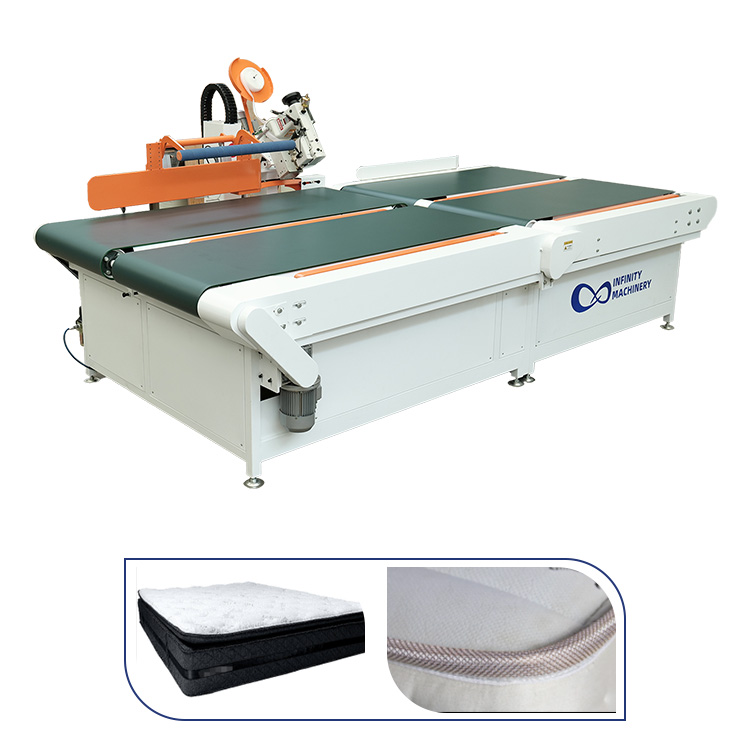
Featuring robotic arm control and an advanced PLC system, this tape edge machine ensures flawless perimeter integrity, preventing border collapse and enhancing sleep stability.
5. The Overly Rigid Orthopedic Myth
DiagnosticsContrary to popular belief, an ultra-firm, unyielding mattress is often just as bad for back pain as a sagging one. Extreme rigidity prevents the hips and shoulders from sinking in, forcing the lower back into an unsupported arch. The ideal mattress requires a delicate balance of deep support and surface yield.
Diagnostics
- Sleep Science: A surface that is too hard creates severe pressure points at the joints, cutting off circulation and causing tossing and turning that disrupts spinal healing.
- Technical Solution: Manufacturers achieve the perfect plush-to-support ratio by expertly combining soft quilted panels with highly responsive core structures, ensuring contouring without compromising alignment.
6. Thermal Trapping and Muscle Tension
Material SafetyMattresses that trap body heat cause sleepers to sweat and become restless. This constant movement prevents the deep muscle relaxation required for spinal decompression. A mattress bad for back pain is often one that is also bad for temperature regulation.
Material Safety
- Sleep Science: Thermal discomfort increases heart rate and muscle tension, completely negating the regenerative benefits of sleep for the spinal discs.
- Technical Solution: Implementing Mattress Manufacturing One-Stop Solutions ensures that breathable fabrics and highly ventilated structural layers are seamlessly integrated without compromising the build quality.
The Craftsmanship Behind Pain-Free Sleep
The true secret to delivering premium, pain-relieving comfort lies entirely in consistent, high-precision manufacturing craftsmanship. While consumers seek relief from back pain through advanced materials, brand owners build lasting success by choosing reliable equipment partners like Infinity Mattress Machinery to maintain uncompromised product standards and structural perfection.
Elevate Your Mattress Manufacturing Standards
Ensure every mattress you produce delivers flawless spinal support with our state-of-the-art machinery.


