

1. The Anatomy of Ergonomic Support
Spinal ErgonomicsNote: The following architectural features are listed in no particular order, reflecting industry-standard designs commonly recommended for orthopedic support by testing agencies. A mattress designed to alleviate back pain must perfectly balance lumbar support with pressure relief at the shoulders and hips. This delicate balance is achieved through a multi-layered construction approach, where each material is engineered to respond dynamically to human body weight.
Structural Blueprint
- Sleep Science: The spine naturally curves, requiring varying levels of resistance from the sleep surface to maintain a neutral posture and prevent muscle strain during the night.
- Technical Solution: Premium brands utilize high-precision assembly processes to seamlessly integrate firm base layers with contouring comfort layers, ensuring zero structural shifting over time.
2. Zoned Pocketed Coils: The Core of Spinal Alignment
Ergonomic DesignAt the heart of any top-rated orthopedic mattress lies an advanced coil system. Zoned pocketed coils provide targeted support, offering firmer resistance in the center third of the bed to support the heavier pelvic region, while remaining softer at the head and foot. The consistency of these zones is entirely dependent on the precision of Mattress Spring Manufacturing Machines.
Coil Calibration
- Sleep Science: Zoned support prevents the lower back from sinking too deeply, which is a primary cause of morning lumbar stiffness and pain.
- Technical Solution: High-speed coiling machinery utilizes precise wire tensioning and automated zoning to create distinct firmness profiles within a single, unified spring unit.
3. High-Density Transition Foam: Bridging Support and Comfort
Material CraftsmanshipDirectly above the coil unit sits the transition foam layer. This dense material prevents the sleeper from feeling the steel springs while distributing weight evenly across the mattress surface. The flawless execution of this layer relies heavily on advanced CNC Foam Cutting Machines to ensure perfectly level surfaces.
Foam Profiling
- Sleep Science: A smooth, evenly cut transition layer ensures that pressure is dispersed gradually, preventing localized pain points in the back and hips.
- Technical Solution: CNC technology guarantees that foam layers are sliced with millimeter accuracy, maintaining the exact thickness required for optimal biomechanical support.
Achieving Premium Standards with Infinity

An advanced multi-needle quilting machine featuring exclusive innovations like a 0.5-inch needle distance and a self-contained mattress border slitting device, delivering versatile and precise quilting patterns.
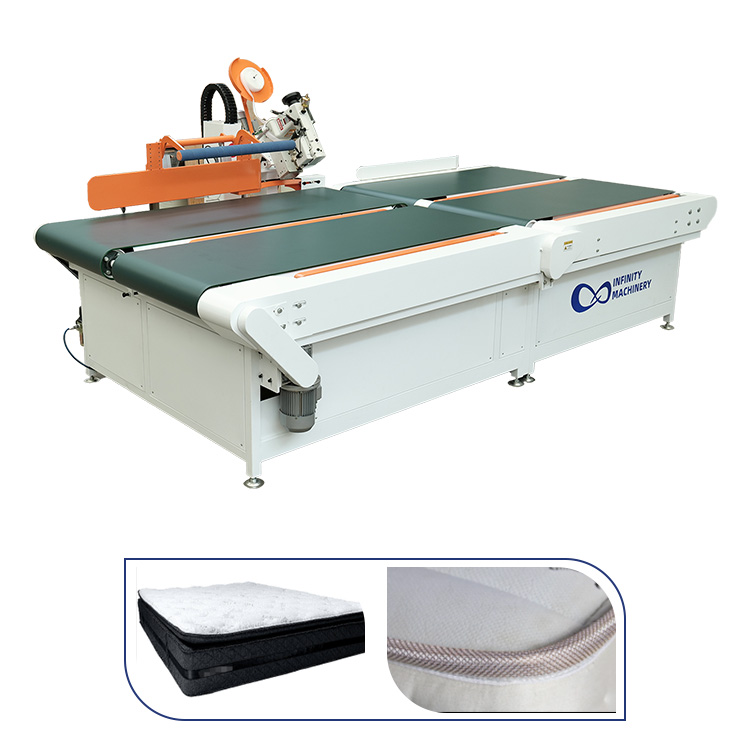
A fully automatic high-speed tape edge machine with a robotic arm and integrated conveyor belt, ensuring aesthetic, straight sutures and robust edge support for premium mattresses.
4. Precision Edge Support: Preventing Sagging and Strain
Manufacturing StandardA mattress recommended for back pain must have robust edge support. Weak edges force the sleeper toward the center of the bed, compromising spinal alignment. Securing the perimeter requires flawless tape edging to lock the internal components together, creating a unified, stable sleep surface from edge to edge.
Perimeter Integrity
- Sleep Science: Firm edge support expands the usable sleep surface and provides a stable base for sitting, reducing the strain on the back when getting in and out of bed.
- Technical Solution: Automated tape edge machinery ensures a perfectly tight, consistent binding around the mattress perimeter, preventing structural collapse over the product's lifespan.
5. Thermal Regulation: Why Cooling Matters for Muscle Recovery
Sleep ScienceWhile firmness is crucial, temperature regulation plays a vital role in back pain relief. Overheating causes tossing and turning, which disrupts the deep sleep phases necessary for muscle repair and spinal decompression. The breathability of the mattress surface is directly tied to the quality of the materials and the quilting design.
Thermal Dynamics
- Sleep Science: A cooler sleep environment promotes uninterrupted REM sleep, allowing the back muscles to fully relax and heal from daily stress.
- Technical Solution: Advanced manufacturing incorporates breathable barrier fabrics and phase-change materials, seamlessly integrated into the mattress cover without compromising structural integrity.
6. The Final Quilted Surface: Ultimate Pressure Relief
CraftsmanshipThe top quilted layer is the first point of contact with the sleeper's body. It must provide immediate pressure relief without negating the firm support of the underlying coils. High-end brands rely on Computerized Mattress Quilting Machines to stitch intricate, continuous patterns that loft the fabric and create a plush, responsive surface.
Surface Tension
- Sleep Science: A well-quilted surface reduces surface tension, allowing the heavier parts of the body to sink just enough to alleviate joint pressure while maintaining lumbar support.
- Technical Solution: Multi-needle chain stitch technology allows for complex, 360-degree quilting patterns that enhance the loft and durability of the comfort layer, ensuring long-lasting orthopedic performance.
The Craftsmanship Behind the Comfort
The true secret to delivering premium, orthopedic comfort that wins consumer recommendations is consistent, high-precision manufacturing craftsmanship. While consumers seek relief from back pain through ergonomic design, brand owners build enduring success by partnering with reliable equipment providers like Infinity Mattress Machinery to ensure every layer meets uncompromised standards.
Elevate Your Mattress Manufacturing Standards
Discover how Infinity Mattress Machinery can transform your production line with high-precision automation, ensuring every mattress delivers the ultimate in sleep science and comfort.


