Two years ago, the owner of a mattress factory in Surabaya, Indonesia, called me with a problem I hear often. "We started making pocket spring mattresses last year. We bought a single-wire coiling machine — it was cheaper. But now our orders are growing and the machine can't keep up. We need to add a second shift just to meet demand. Should I buy another single-wire machine, or switch to dual-wire? And what do I do about assembly — my current assembly table is manual and slow."
This is not a simple question. The answer depends on your volume, your labor cost, your product mix, and your growth plans. The wrong choice can cost you tens of thousands of dollars in idle capacity or wasted material. This article walks through the real considerations — not the marketing claims — so you can make the right decision for your factory.
Before comparing machines, it helps to understand what they do differently. Both single-wire and dual-wire pocket spring machines produce individual springs and wrap them in fabric pockets. The difference is in how they handle the wire.
Single-wire machines feed one wire at a time through a single coiling head. Each spring is coiled, cut, and pocketed one at a time. They are simpler machines — fewer moving parts, lower cost, easier to maintain. A typical single-wire machine produces about 30-50 pocket springs per minute, depending on spring diameter and wire gauge. The IF-P130-1, for example, is a single-wire CNC pocket spring coiling machine that stores parameters for up to 30 different spring specs.
Dual-wire machines feed two wires simultaneously through two independent coiling heads. They produce two springs at the same time, effectively doubling the output per minute. A typical dual-wire machine like the IF-P180-2 Dual Wire Pocket Spring Coiling Machine produces 70-100 pocket springs per minute. The trade-off is that dual-wire machines are more complex, more expensive to buy, and require more precise maintenance.
This seems straightforward: dual wire = more output. But the real question is whether your factory can use that extra output efficiently, and whether the higher investment makes sense at your volume. Many factory owners I talk to assume that more output is always better. It's not. The right machine depends on your assembly capacity, your labor situation, and the variety of springs you need to produce.
The Surabaya factory was producing about 120 pocket spring mattresses per day. Their single-wire machine ran 10 hours per day, 6 days a week, to keep up. They had two operators per shift working on the manual assembly table. The assembly step — inserting coiled springs into the fabric and sealing each pocket — was their second bottleneck after coiling.
I advised them to approach this in two stages. First, upgrade the assembly line. A manual assembly table, no matter how skilled the operators, simply cannot keep up once coiling exceeds about 50 springs per minute. The solution was the IF-PPA Automatic Pocket Spring Assembly Machine, which automates the insertion and sealing process. This immediately increased their assembly throughput by 3x and freed up two operators per shift.
Second, they brought in an IF-P180-2 dual-wire coiling machine to replace their old single-wire unit. The IF-P180-2 was configured for their most popular spring spec — 1.8mm wire, 68mm diameter, 6-turn coils. At 85 springs per minute, it matched perfectly with the IF-PPA's assembly speed. The old single-wire machine was moved to a separate production line for short-run specialty springs and samples.
The combined result: output went from 120 to 220 mattresses per day — an 83% increase — without adding any labor. Total investment in the IF-P180-2 and IF-PPA was recouped in 14 months from labor savings and increased production alone. The owner told me: "The dual-wire was the right choice for us, but only because we fixed the assembly bottleneck first. If we had bought the dual-wire machine without upgrading assembly, we would have just piled up coiled springs on the floor."

The IF-P180-2 Dual Wire Pocket Spring Coiling Machine is designed for factories that need high-volume pocket spring production. Its dual-wire system simultaneously coils two independent springs, effectively doubling the output of a single-wire machine. It handles wire diameters from 1.3mm to 2.2mm and produces spring diameters from 48mm to 80mm. The computerized control system stores up to 30 spring specifications and recalls them instantly — changeover takes under 5 minutes.
One important detail about the IF-P180-2 that most factory owners appreciate: it produces both left-hand and right-hand coiled springs simultaneously. This is critical for pocket spring mattresses because alternating the coil direction in the mattress prevents the springs from leaning. With a single-wire machine, you need to reconfigure between left-hand and right-hand production, which costs time and creates inventory management issues. The IF-P180-2 eliminates this problem entirely.
The IF-P180-2 is not a machine for every factory. It is most effective when your daily pocket spring mattress output exceeds 150 units, or when you run long production runs of the same spring spec. If you produce multiple spring sizes frequently throughout the day, the changeover time — while fast — still adds up. For those factories, a bank of single-wire machines might be more flexible. But if your production is standardized and your volume is high, the IF-P180-2 is the most cost-effective coiling solution available.
The IF-PPA is often the missing piece in pocket spring production lines. Factory owners focus so much on coiling speed that they forget the assembly step. A fast coiling machine paired with a slow assembly process creates a bottleneck that wastes the coiling machine's potential. The IF-PPA Automatic Pocket Spring Assembly Machine solves this by automating the entire insertion, pocketing, and mat formation process.
The IF-PPA takes coiled springs from the coiling machine, inserts them into the non-woven fabric, seals each pocket, and forms the spring mat — all automatically. One operator can oversee the entire process. Without the IF-PPA, you typically need 3-4 operators on the assembly line to keep up with a dual-wire coiling machine. With it, you need one. Over a year, that's a labor saving of $50,000-$80,000 depending on your region.
The Indonesia factory saw the IF-PPA as the key enabler of their dual-wire upgrade. Without it, the IF-P180-2 would have been wasted. With it, the combination was transformative. The IF-PPA also improved quality consistency — machine-sealed pockets have uniform tension and seal strength, unlike manual assembly where operator fatigue causes variation in the afternoon shift.
One technical advantage of the IF-PPA that operators notice immediately: it handles fabric tension automatically. Non-woven fabric rolls vary in tension from the core to the outer layers. Manual assembly lines struggle with this — too loose and the fabric puckers, too tight and the springs compress unevenly. The IF-PPA's automatic tension control maintains consistent pocket dimensions across the entire roll, which translates to a flatter, more uniform mattress surface.
Before you decide, work through these questions. They will help you identify the right combination of coiling and assembly equipment for your specific situation.
1. How many pocket spring mattresses do you produce per day?
Under 100: start with a single-wire machine like the IF-P130-1 plus IF-PPA.
100-200: dual-wire IF-P180-2 plus IF-PPA is your sweet spot.
200+: consider dual-wire IF-P180-2 plus IF-PPA, or multiple single-wire units for flexibility.
2. How many different spring specs do you run per day?
1-2 specs: dual-wire is efficient. Changeover is minimal.
3+ specs: multiple single-wire machines are more flexible. You avoid changeover downtime.
3. What is your current assembly process?
Manual assembly with 3+ operators per shift: upgrade to IF-PPA before or alongside a faster coiling machine. Don't buy coiling capacity you can't assemble.
4. How much labor cost are you carrying in your spring department?
If you have 4+ people on pocket spring assembly, the IF-PPA pays for itself in labor savings within 12-18 months regardless of which coiling machine you choose.
5. Do you make both left-hand and right-hand coil mattresses?
If yes, dual-wire eliminates the production and inventory complexity of alternating coil directions. This alone can justify the upgrade for many factories.
6. Are you planning to grow production in the next 12 months?
If your orders are growing 20%+ per year, buy equipment that handles 150% of your current needs. It is cheaper to buy one machine that covers growth than to sell and replace equipment in 18 months.
The wrong pocket spring equipment decision costs you in two ways: lost production if you under-invest, and wasted capital if you over-invest. But there is a third cost that factory owners rarely consider: the cost of complexity.
Dual-wire machines are more complex. They have more moving parts, more sensors, and more points of adjustment. When something goes wrong — and things do go wrong in every factory — diagnosing a dual-wire issue takes longer and requires a more skilled technician. The IF-P180-2 is designed to minimize this with its computerized diagnostics and modular components, but it's still a more sophisticated machine than a single-wire unit.
The Indonesia factory addressed this by training two of their existing mechanics on the IF-P180-2 during installation. Infinity sent a technician who spent three full days training the team on maintenance, troubleshooting, and changeover procedures. That upfront training investment paid for itself within the first month when a sensor alignment issue was diagnosed and fixed in 45 minutes instead of the 4 hours it would have taken without the training.
Another hidden cost: inventory. Dual-wire machines produce two springs at once. If you need to change a spec, you either run the machine with one head idle (wasting half its capacity) or you produce inventory you don't need yet. This is manageable with planning, but it's a consideration. The IF-P180-2 allows independent control of each coiling head, so you can run different specs on each side if needed. This is a feature most competitive machines don't offer, and it made a significant difference for the Indonesia factory, which sometimes runs two mattress models simultaneously.
Dual wire pocket spring coiling machine. 70-100 springs/min, stores 30 spring specs, produces left & right hand coils simultaneously.
View IF-P180-2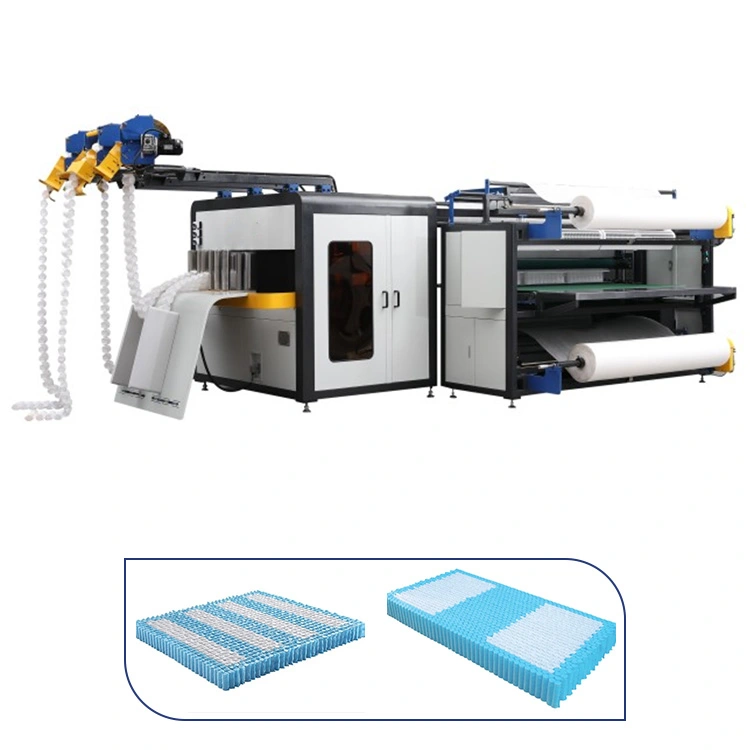
Automatic pocket spring assembly machine. Auto insertion, pocketing, and mat formation. Replaces 3-4 operators. Automatic tension control.
View IF-PPA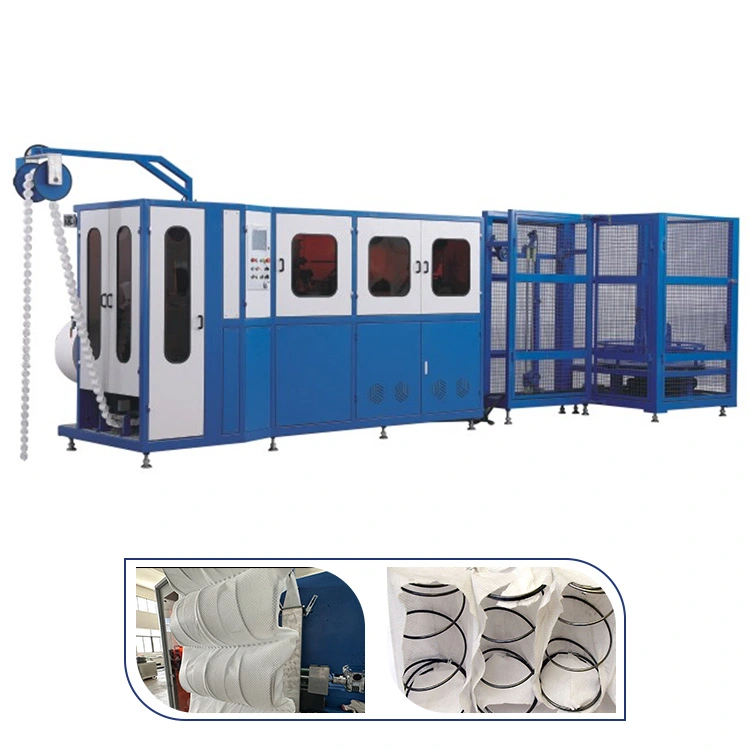
CNC single-wire pocket spring coiling machine. Stores 30 spring parameters, quick changeover, compact footprint. Best for 50-150 mattresses/day or multi-spec runs.
View IF-P130-1Here is a simple way to think about it. If your pocket spring production fits any of these profiles, the IF-P180-2 dual-wire machine plus IF-PPA assembly is likely the right combination:
• You make 150+ pocket spring mattresses per day
• You run 1-2 spring specs as 80%+ of your production
• You have 3+ people on manual spring assembly today
• You want to grow production without adding headcount
• Your current coiling machine is running double shifts
If your profile looks different — lower volume, more variety, tighter capital budget — consider the single-wire IF-P130-1 plus IF-PPA. It is a simpler system with a lower entry cost that still delivers automated assembly. You can always add a second single-wire machine later, or move to dual-wire when your volume justifies it.
The Indonesia factory made the dual-wire choice and it was the right call for them. But I have worked with other factories where single-wire was the better answer. The key is understanding your own production profile and not getting seduced by speed specifications on a brochure. A machine that runs at 100 springs per minute only helps you if your assembly line can handle 100 springs per minute. Otherwise, you are paying for capacity you cannot use.
Tell us your daily output, spring specs, and current assembly setup. We will recommend the right coiling + assembly combination — no obligation.

